A NEWSLETTER FROM PERTHIRTYSIX
The Nine Thirty-Six
A letter from the two of us, most Mondays.
|
||
|
A LETTER FROM
ShriI've been having fun on the fourth installment of the How The Heck series: How The Heck Do Solar Panels Work? It's a topic I've always known about only at the highest level: the Sun shines light into a solar panel, it jiggles some silicon, and somehow that can power your home. That feeling of “huh, I wonder how that actually works” makes it a perfect candidate for this series of everyday tech explainers. 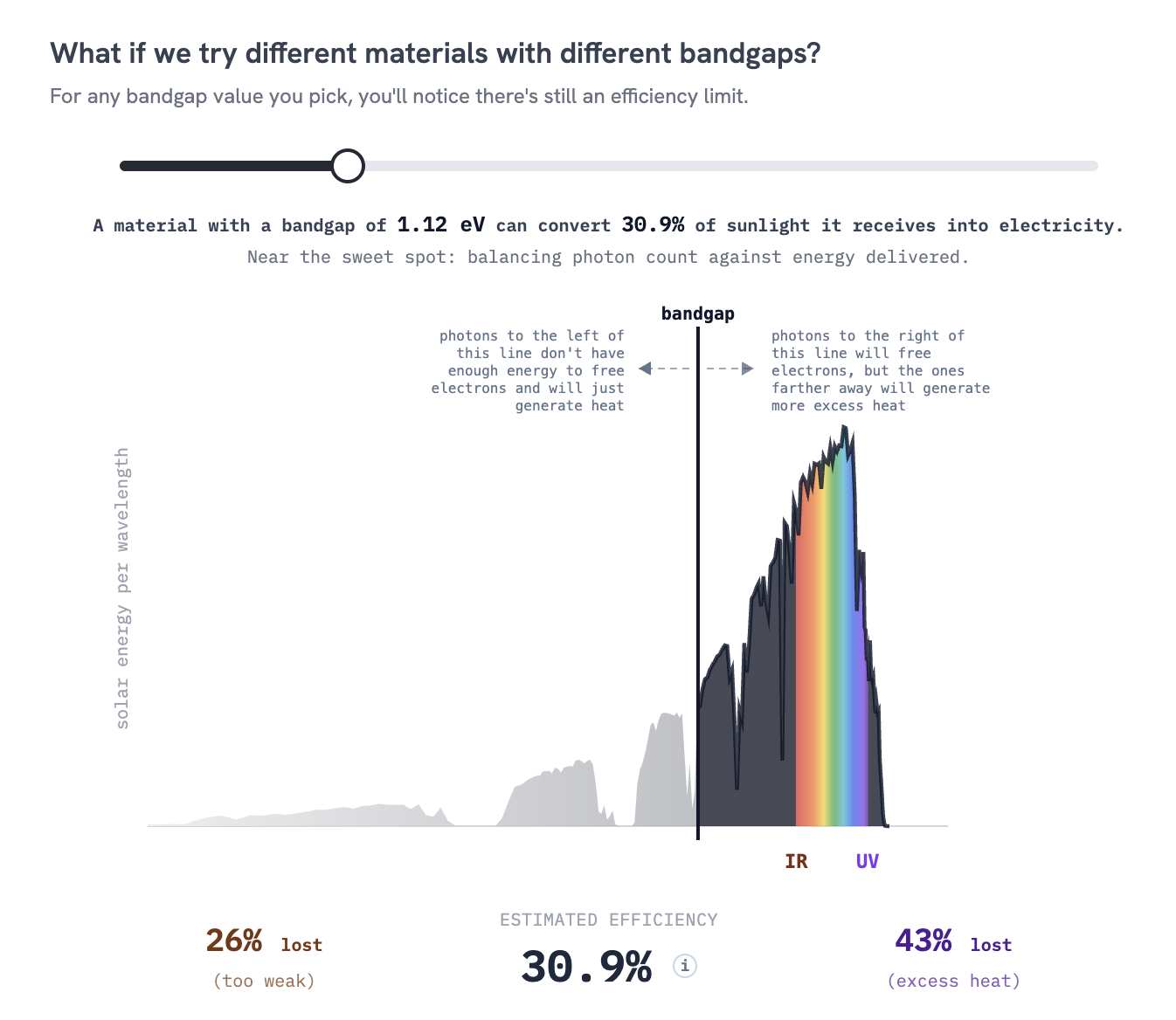
Tuning the bandgap — silicon, at 1.12 eV, captures 30.9% of the spectrum. It's been a deeper rabbit hole than I imagined, and will likely be the longest piece in the series so far. I'm not particularly a physics/chemistry person (although I did minor in astronomy!), so I've read a lot of explanations and watched a lot of videos preparing this piece. I'm happy with how the interactive visuals are looking. On a technical level, I'm using almost every tool in the toolbox for this piece: Canvas, SVG, and ThreeJS. 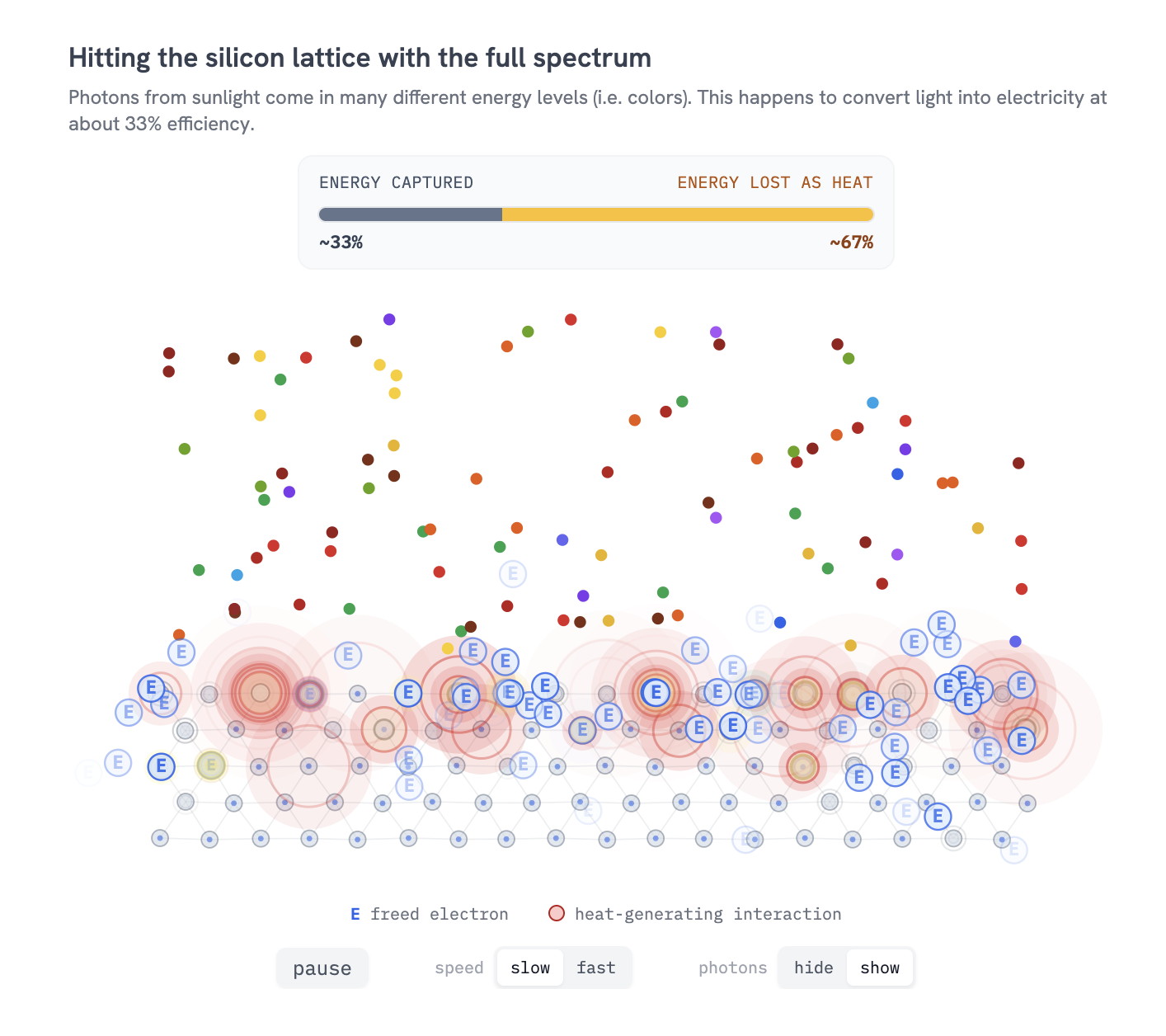
Photons hitting the silicon lattice — ~33% captured, ~67% lost as heat. I'm hoping to get this out into the world in the next week or two. Can't wait for you to see it! — Shri |
||
|
A LETTER FROM
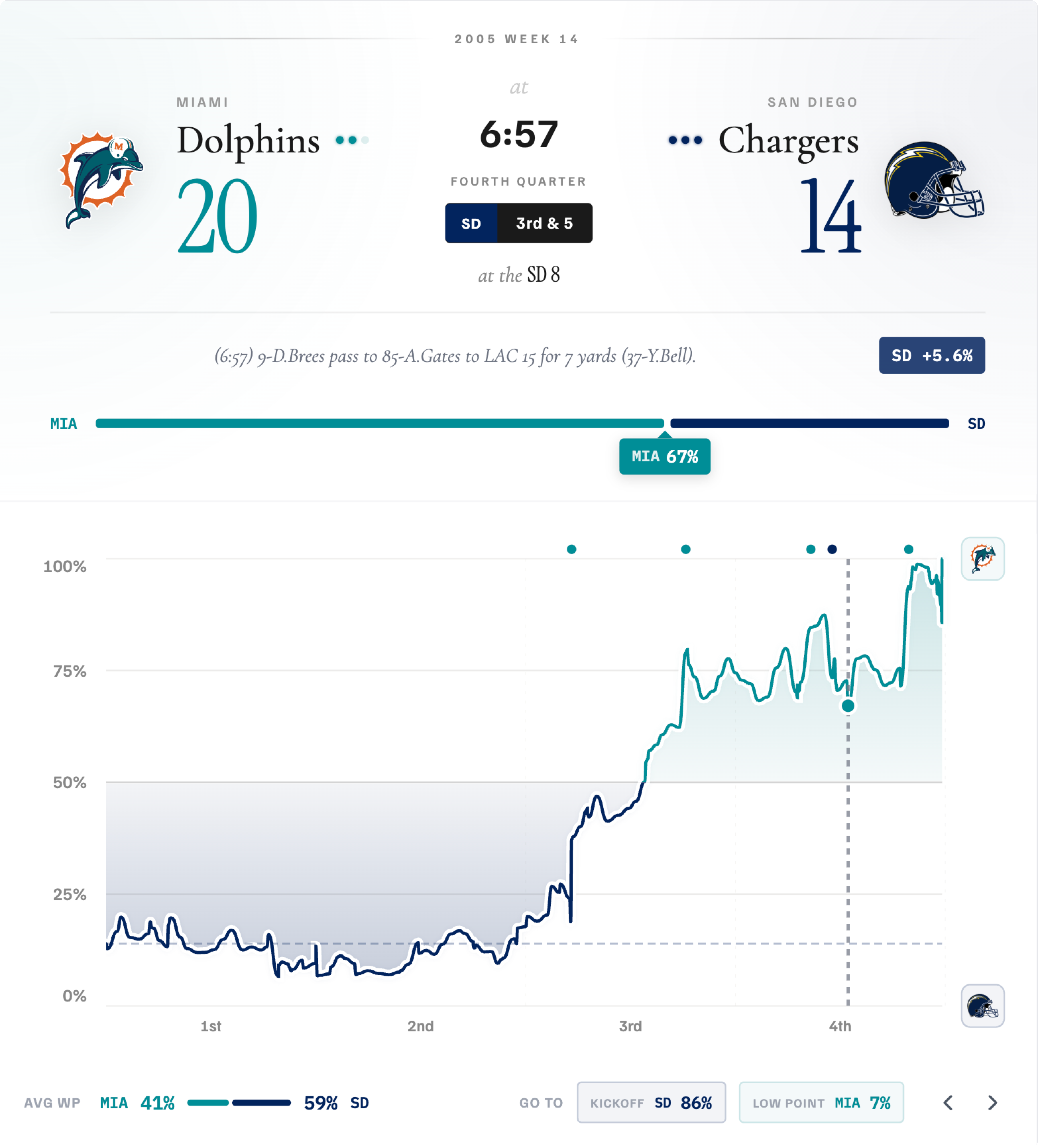
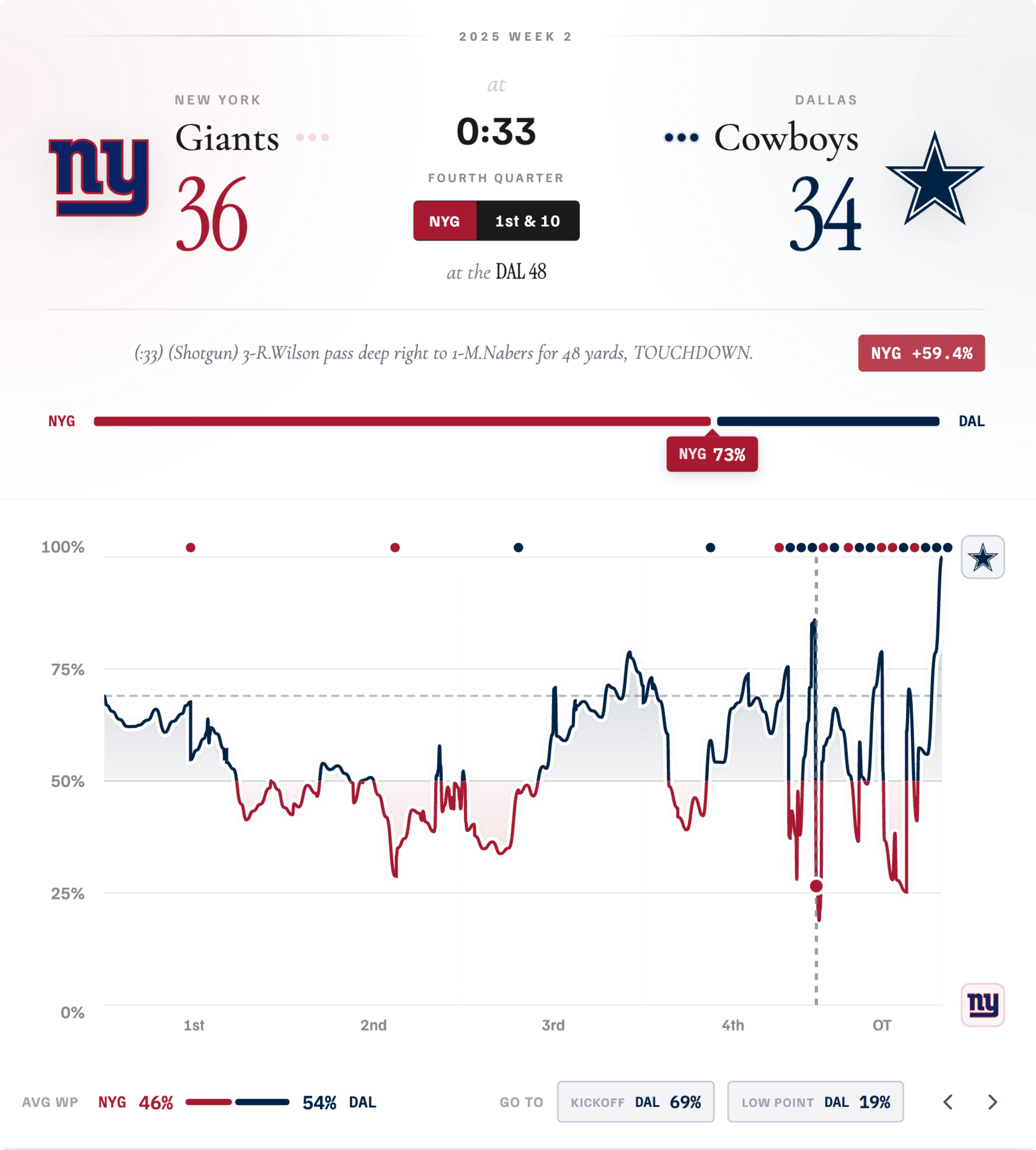
RobThe paradox of the month is Jevons', where AI makes writing software easier and will thereby increase demand for it. For me, the more relevant story is animation. When animators had to painstakingly draw every frame by hand, they made sure every frame mattered. It's only when frames got cheap that we end up with The Emoji Movie and a flood of low-intent productions. But at the same time, we also got Into the Spider-Verse. Friction is an easy way to enforce intention. But it serves more as a blocker against low-quality work rather than a requirement for truly remarkable work. I've found my own satisfaction is tied less to my productive output and more to the time I spend in good, deep thought. All the good stuff comes from solving the hard problems, obsessing over the details, making sure that the underside of the table is held to the same high standard as the top. For my Heart Rate Index, the underside of my table was… a scorebug. 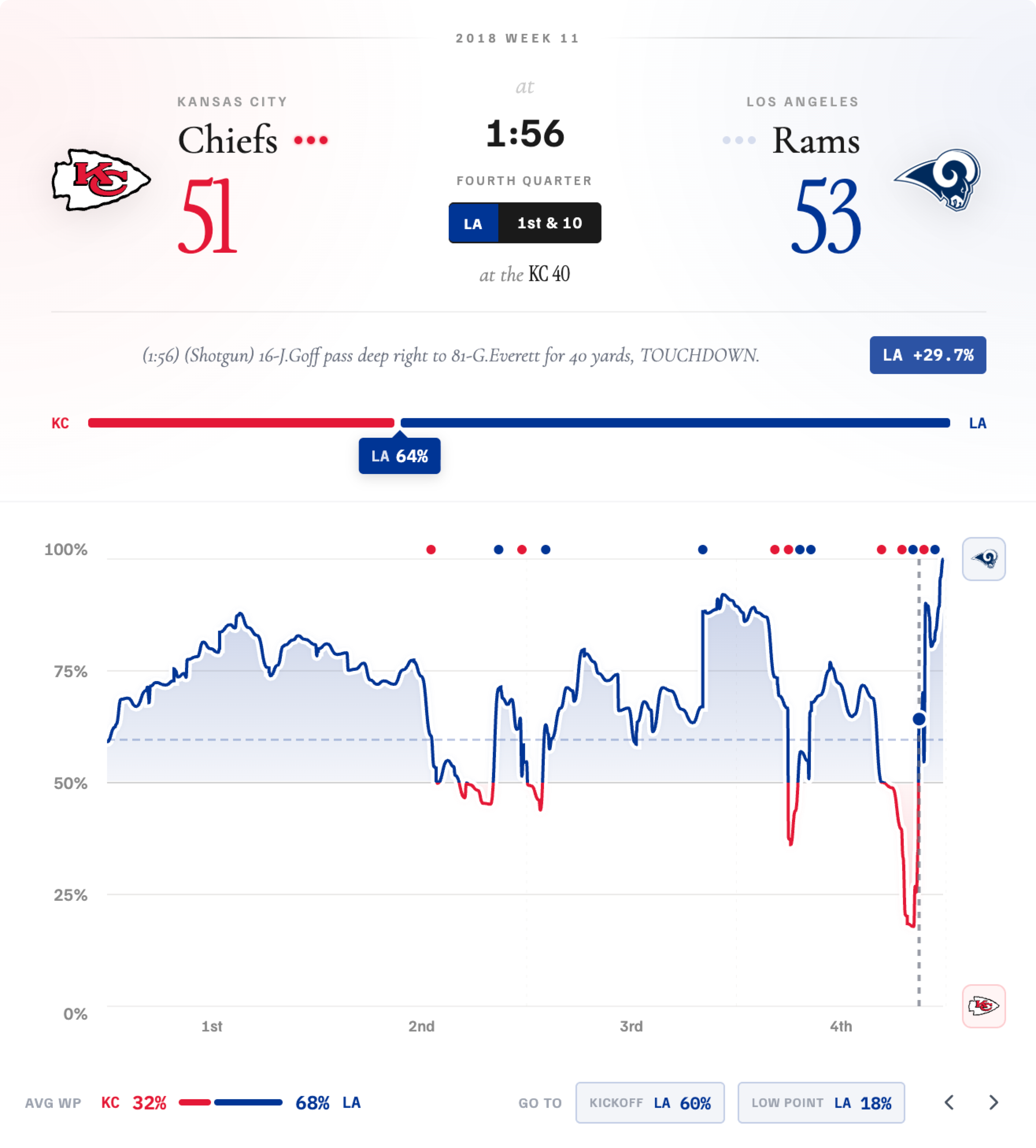
Chiefs–Rams — the second-highest-rated regular-season game on the Heart Rate Index. Click for the one that tops it. A scorebug is the small thing at the bottom of the screen during a game. The score, the clock, the down & distance. Scorebugs have fascinated me for years. This is the first one I've built. Here's the underside:
Explore the Heart Rate Index → I keep coming back to Seneca: “You may say: ‘For what purpose did I learn all these things?’ But you need not fear that you have wasted your efforts; it was for yourself that you learned them.” Does anyone else care? I do. That is enough. — Rob |
||
|
A FEW SMALL THINGS
If you've been forwarded this by a friend, you can subscribe directly here. If you have a specific question for either of us to answer in a future issue, just reply — it comes straight to our inboxes. |
||
|
THANKS FOR READING.
Written by Shri & Rob ·
perthirtysix.com
|